
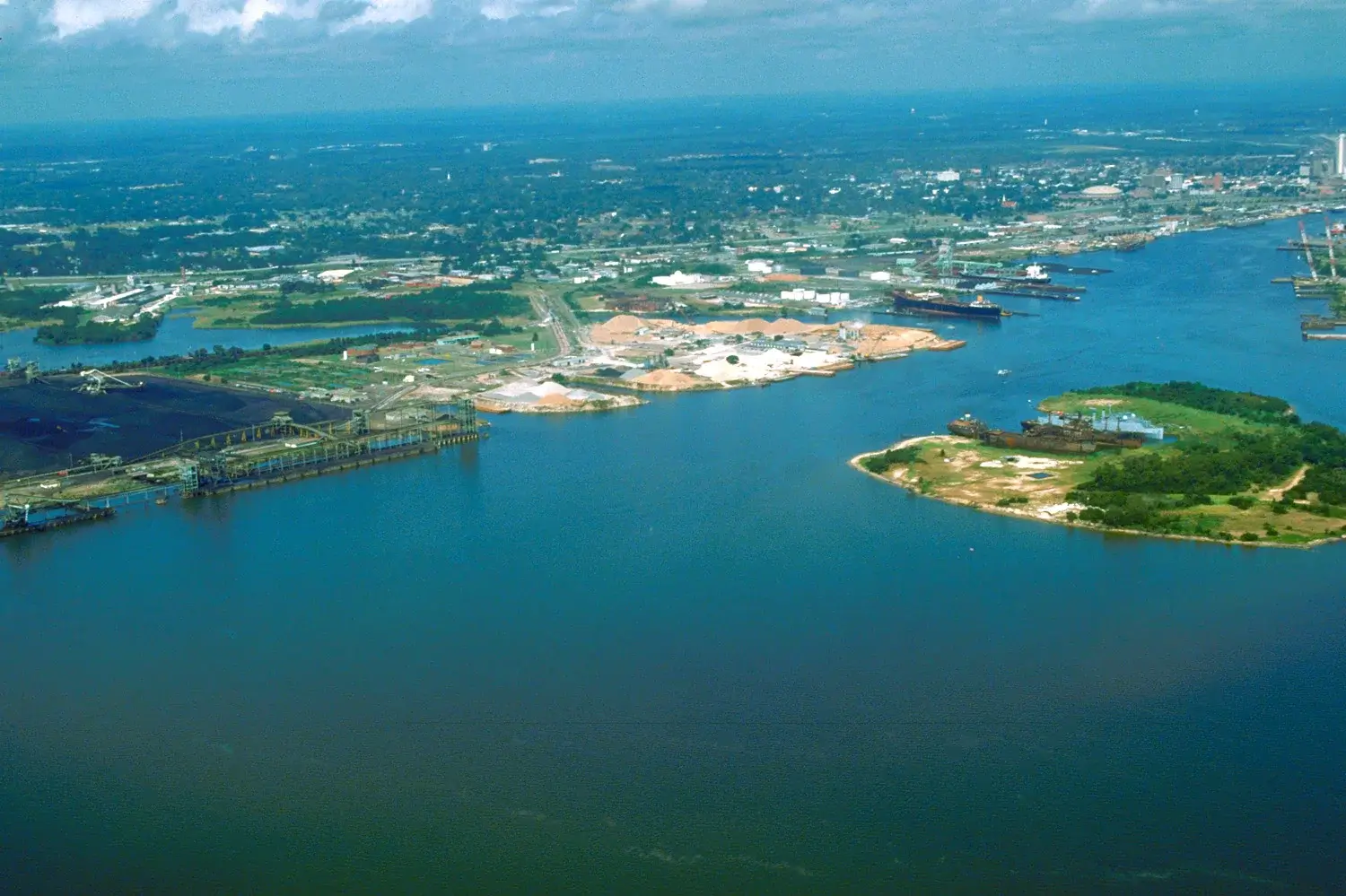
The Port of Mobile is one of the oldest and most important ports in the United States. Situated at the head of Mobile Bay where the Mobile and Tensaw Rivers meet the Gulf, the port has served for centuries as a gateway between inland America and the wider world. Its history reflects the broader story of the nation itself—shaped by Indigenous trade networks, European colonization, global commerce, war, industrial growth, and modernization.
For a maritime museum, the Port of Mobile offers a powerful case study in how geography, technology, and human labor combine to create a lasting maritime legacy.

Indigenous Trade and Natural Geography
Long before the establishment of a formal port, Indigenous peoples used the waterways of coastal Alabama as transportation routes and trade corridors. The Mobile-Tensaw Delta provided a natural highway connecting inland communities to the Gulf. Dugout canoes carried goods, people, and ideas through this vast river system.
This geography—deep rivers, a protected bay, and access to the open Gulf—made the area ideally suited for maritime activity. These same natural advantages would later attract European powers and shape the development of the Port of Mobile.
Colonial Foundations of the Port
The modern history of the Port of Mobile began with the city’s founding by the French in 1702. As the first capital of French Louisiana, Mobile quickly became an important colonial port, supplying ships and supporting trade across the Gulf Coast.
Control of Mobile shifted among France, Britain, and Spain throughout the 18th century. Each governing power relied on the port for military logistics, trade, and communication. Goods such as timber, animal hides, agricultural products, and imported supplies moved through Mobile Bay, linking the colony to Atlantic trade routes.
These early colonial years established Mobile’s role as a strategic maritime center long before it became part of the United States.
The Port in the Early United States
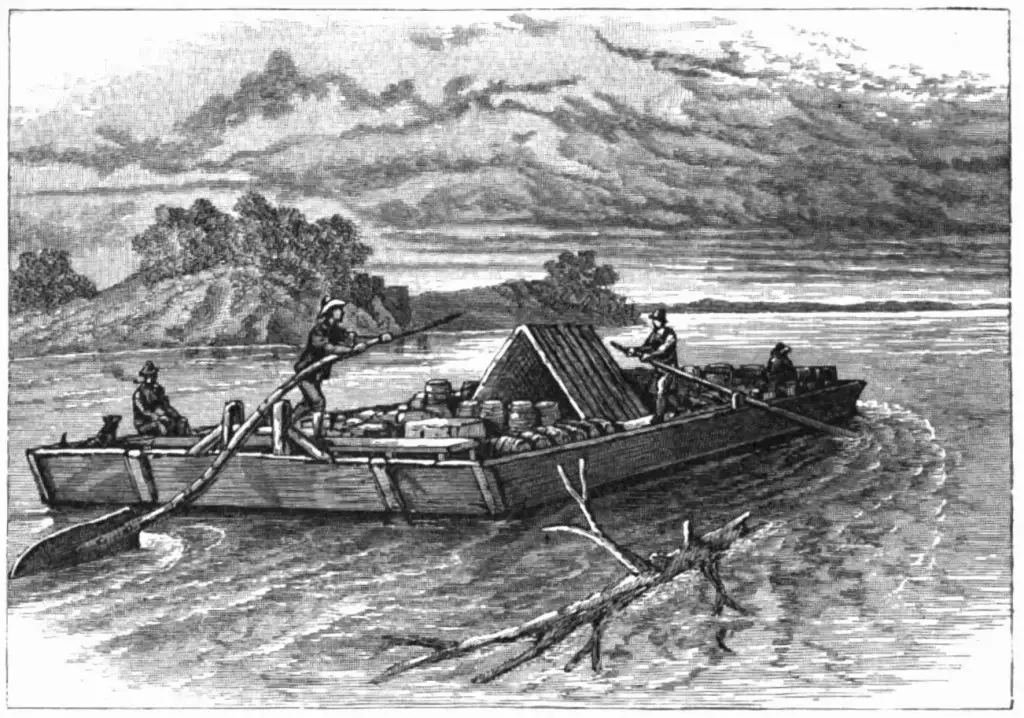
After Mobile officially became part of the United States in 1813, the port entered a period of rapid growth. Alabama’s admission to the Union in 1819 and the expansion of agriculture across the interior dramatically increased river traffic flowing toward Mobile.
Flatboats and steamboats carried crops, lumber, and other goods down the Mobile River system. The port became a vital outlet for inland producers seeking access to national and international markets. Warehouses, docks, and shipyards expanded along the waterfront, transforming Mobile into a bustling commercial port.
Cotton and the Rise of Global Trade
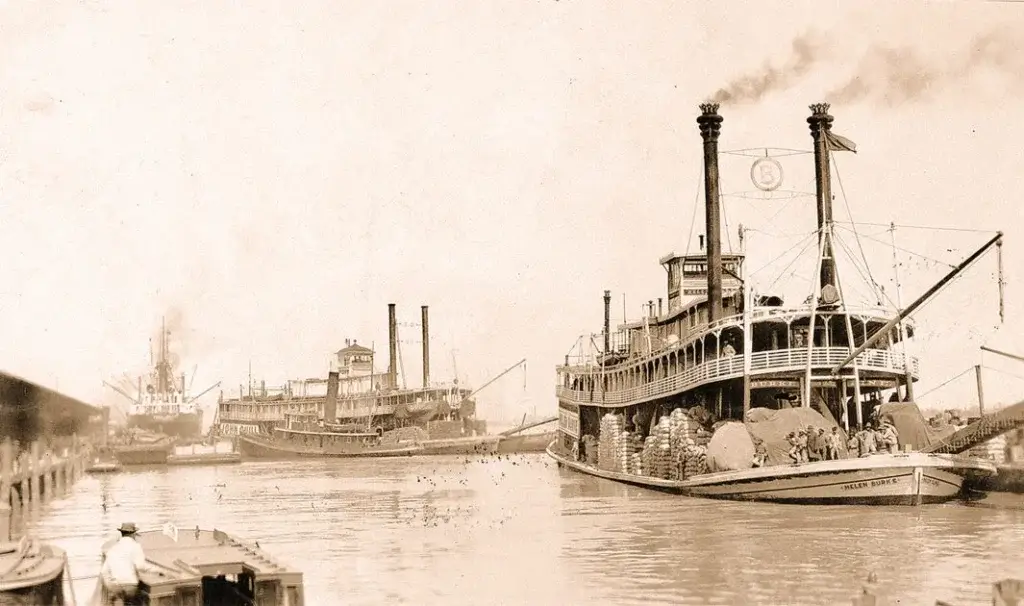
During the 19th century, cotton dominated the Port of Mobile’s trade. The port became one of the leading cotton-exporting ports in the United States, shipping bales to textile mills in Europe and the northeastern states.
Steam-powered vessels increased efficiency and volume, allowing the port to handle greater quantities of cargo. This prosperity, however, depended heavily on enslaved labor, both on plantations and in port-related work. The wealth generated through the port was inseparable from the human cost of slavery—a critical part of the port’s history that must be acknowledged.
By mid-century, Mobile ranked among the most important ports in the South, closely tied to global economic networks.
The Civil War and the Battle of Mobile Bay
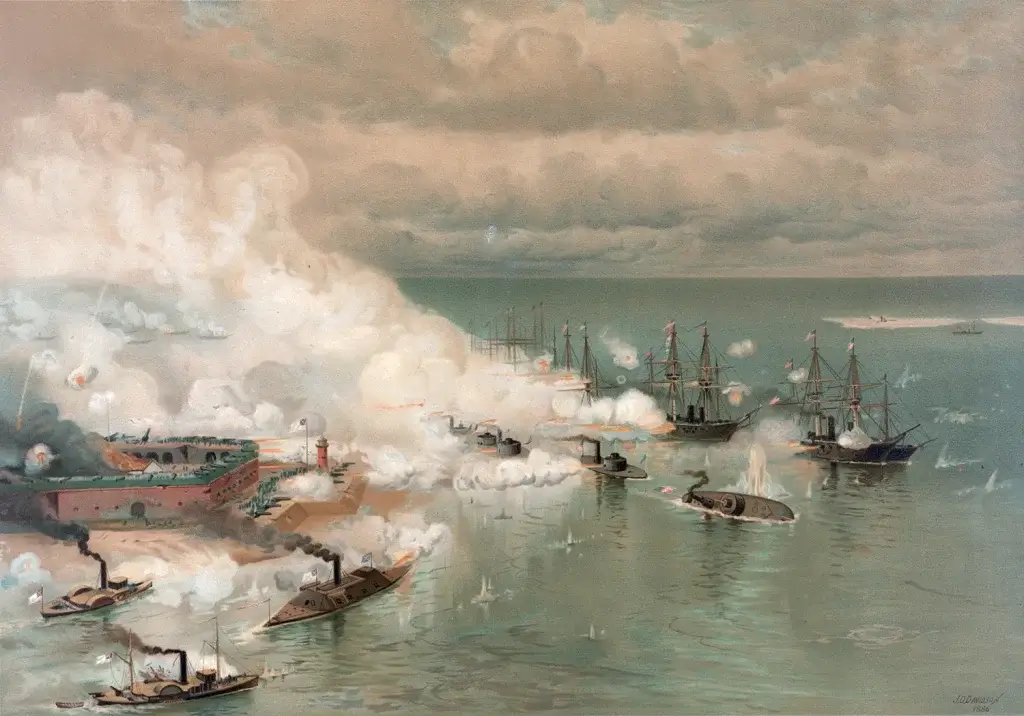
The Civil War marked a dramatic turning point for the Port of Mobile. As a Confederate port, Mobile remained open longer than many Southern ports due to its defenses and strategic importance. Blockade runners used the port to bring in supplies while exporting cotton.
In 1864, Union forces captured Mobile Bay in a major naval engagement known as the Battle of Mobile Bay. The battle effectively sealed the port and crippled Confederate supply lines. Although the city itself fell later, the loss of the bay marked the end of Mobile’s role as an active wartime port.
The war’s aftermath left the port economically damaged, requiring years of recovery and rebuilding.
Reconstruction and Industrial Expansion
Following the Civil War, the Port of Mobile gradually rebuilt and modernized. Improvements to docks, navigation channels, and harbor infrastructure allowed the port to regain its commercial importance.
The late 19th and early 20th centuries saw diversification beyond cotton. Lumber, coal, iron, and other industrial commodities moved through the port, reflecting the South’s changing economy. Advances in dredging helped maintain deeper channels, enabling larger vessels to access the harbor.
The port’s growth mirrored the broader industrialization of the United States.
World Wars and Shipbuilding
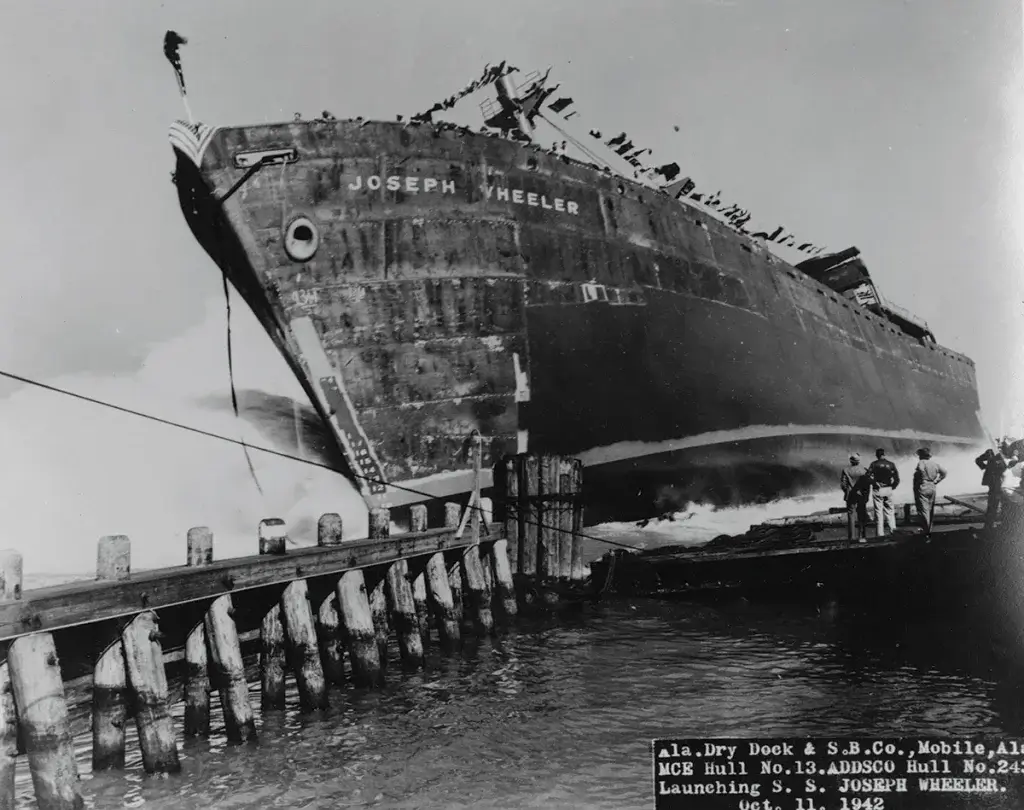
The 20th century brought renewed strategic importance to the Port of Mobile. During both World War I and World War II, the port supported military logistics and shipbuilding efforts. Shipyards in the Mobile area produced vessels for the U.S. Navy and merchant marine, employing thousands of workers.
These wartime industries transformed the local workforce and expanded the port’s infrastructure. Women and minorities entered industrial maritime jobs in greater numbers, reshaping the social fabric of the waterfront.
Modernization and the Container Age
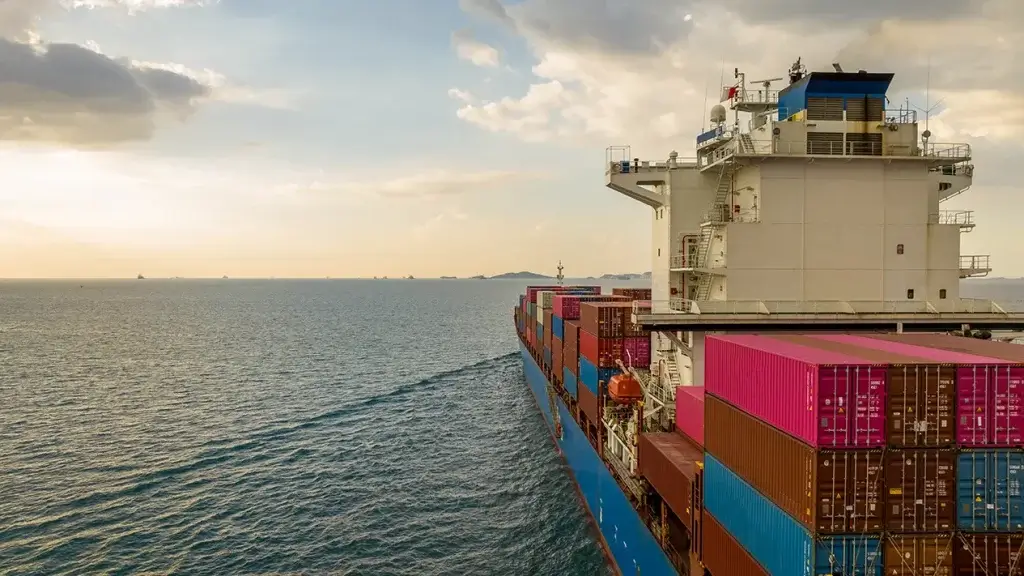
In the latter half of the 20th century, the Port of Mobile adapted to dramatic changes in global shipping. Containerization revolutionized cargo handling, requiring new terminals, cranes, and logistics systems.
Investments in infrastructure allowed the port to remain competitive in international trade. Today, the Port of Mobile handles a diverse range of cargo, including containers, bulk commodities, automobiles, and agricultural products. It serves as Alabama’s primary deepwater port and a key economic engine for the region.
The Port of Mobile Today
Today, the Port of Mobile connects Alabama to markets around the world. Modern facilities operate alongside historic waterfront areas, illustrating centuries of continuity and change. The port supports thousands of jobs and plays a critical role in regional and national commerce.
At the same time, preservation efforts and maritime museums ensure that the port’s long history is not lost amid ongoing development.
Conclusion
The history of the Port of Mobile is a story of adaptation and resilience. From Indigenous trade routes and colonial ambitions to cotton exports, wartime service, and modern global shipping, the port has continually evolved to meet changing demands.
For a maritime museum, the Port of Mobile offers more than a timeline of commerce—it provides insight into how maritime infrastructure shapes communities, economies, and national history. The waters of Mobile Bay continue to carry the legacy of centuries of maritime activity, linking past, present, and future.